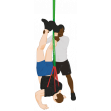
Resistance bands are an excellent fitness accessory and have been gaining in popularity as a result of their relatively low cost and extreme flexibility they can bring to your training.
What are resistance bands?
First invented in 1980 by former football coach Dick Hartzell, resistance bands are also known as fitness bands, sports bands, strength bands and numerous other terms. These bands are essentially heavy duty elastics formed into a loop that offer various levels of resistance levels based on the thickness of the band in use.
![]()
We aren't referring to therabands or the various other forms of elasticated fitness products that are marketed at women or for physical therapy use, these are heavy duty bands used for serious strength training, powerlifting and general conditioning.
The bands are offered in different resistance levels determined by varying thickness and width in the band, usually around 40" in length. The bands offer variable resistance meaning the resistance increases throughout the range of motion, with the greatest resistance felt at the top of the lift.
How are resistance bands used?
Resistance bands can be used in all manner of ways across many different fitness disciplines and you truly are limited only by your imagination. Here are some of the ways we've seen them used along our travels:
Example uses:
Assisted Pull-up
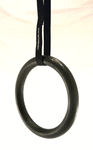
A common use of resistance bands is for assisted pull-ups. Whether performing pull-ups on gymnastic rings or a fixed bar if you are struggling to get to grips with the pull-up a resistance band can help.
Simply link or choke the band around the bar or rings and loop the opposite end of the band under your shoe or secured under one knee.

Grasp the pull-up bar or rings and perform the pull-up as normal and the bands will bear some of your weight to make the exercise more achievable. As your pull-up strength increases your need for the band assistance decreases.
To add assistance to the exercise, simply loop the band around the bar a few times before choking.
Ballistic Running Drills
Resistance bands can be used for ballistic running drills to develop explosive power, speed and agility by fixing bands to an anchor point such as a pole or even a training partner. Medium and heavy bands are recommended for running drills and it's essential you use at least three bands to ensure there is a safe operating distance between you and the anchor point! Link bands using the choke technique described below.

Resistance Band for powerlifting / weightlifting
Resistance bands can be used in various ways to help with common weight training exercises like the squat, deadlift or bench press by securing the band to an anchor point (like a heavy dumbbell / weight plate / power cage frame) and the other end to your barbell on either side.
Note: Ensure you use a heavy dumbbell so that it won't raise from the floor during the lift or thread the bands through additional weight plates to secure. If round dumbbells are used you may need to fix these in position with other plates to prevent them rolling around.
To increase the resistance simply loop the bands round the anchor point a few times before choking.

This will increase tension throughout the lift and ensure you develop explosive power, speed strength and increase acceleration with gains in absolute strength.
What can I hook Resistance Bands to?
You can suspend bands from any anchor point that is solid with no sharp edges, such as:

Attach bands to the anchor point using the choke technique.
Note:
fitstreamists are neither dieticians nor pyhsicians - Always consult your GP before undertaking any form of weight loss, fitness or exercise