Training journal
Published: 10-10-2009 | Updated: 19-03-2013Why keep a training journal?

A common reason many people don't meet their fitness goals is because they fail to monitor progress towards their aims.
Maintaning a training journal, log or diary can be essential to achieving high levels of fitness and reaching your goals.
Exercise journals aren't just for professional weightlifters or powerlifters but everyone can benefit from tracking their progress and documenting current routines and training methods.
Aimless and uncoordinated training is a common culprit of failed fitness routines as we become frustrated with the lack of visible progress and give up too soon. Without meaningful insight into what is and isn't working for you it will be difficult to build a tailored and effective training style.
Our article on fitness planning will help you to understand just how a journal can fit in with your existing training regime and fitness goals.
The elements of fitness
Our bodies and fitness levels are derived from many different interacting elements - training type and chosen exercises, duration of workouts, intensity, frequency of workouts, diet... the list goes on. As these elements change, so do our bodies and it's difficult to recall what you did, when you did it and the effects this had.
A training log will allow you to build a mental picture of progress (or lack of) and allow you to track and adjust your routine accordingly. Not only this, but fitness diary's are motivational - reminding you where you came from and what you've done to get where you are today.
The benefits of a training journal:
- Record personal bests
- Discover what works for you... and what does not
- See progress clearly
- Track progress against goals
- Review your workouts
- Use your training past to inform your training future
What should I record in my fitness journal?
We believe fitness should be a way of life, but not the purpose in life.
We don't recommend you go logging crazy, meticulously planning workouts and keeping records that would make an accountant jealous. We prefer to keep a high-level training log with weights and a record of exercises and personal bests. This can do wonders not only for your sense of achievement but also turns into a valuable resource from which you can make informed judgements about your fitness routines and lifestyle.
Try recording some of the following:
- Your fitness goals and targets
- Exercises, weight used, reps and sets
- Personal bests
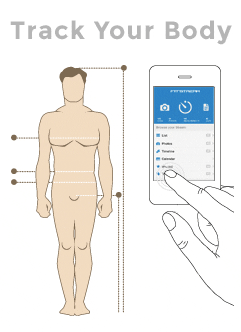
- Measurements: weight, waist etc
- Diet notes
Training Journal Summary
If you're determined to succeed and continuously develop then you'll want to know what you're doing, where you've been and where you want to end up. Keeping a training log is an invaluable resource to helping you achieve this.
In our experience, the times we didn't keep a training journal our workouts became stagnant, our progress halted and the enthusiasm and drive just wasn't quite the same. Walking into your workout armed with the knowledge of your personal best, or even just the reps from your last workout gives you a great psychological boost and a target to aim for. It pushes you to better yourself and those last few fought our reps make all the difference.
Download Training Log Templates

You can download our example training logs below to get you started:
Complete a sheet for each workout and build up a record over time. You can use the notes area to record your base statistics and there's a row for each exercise to track your personal best, previous best, weight used and number of reps, (including a cumulative total for the workout).
Disclaimer
Always consult your GP before undertaking any form of weight loss, fitness or exercise